Stop Redheaded Flea Beetle
A New IPM Working Group to Address Redheaded Flea Beetle Problems in Nurseries
What is RHFB?
The redheaded flea beetle (RHFB), Systena frontalis (F.) (Coleoptera: Chrysomelidae), is a serious insect pest in ornamental plant nurseries throughout the eastern half of the US. It is also referred to as the cranberry flea beetle in cranberry and blueberry systems in the northern US. Adult RHFB causes serious feeding damage to the foliage of a variety of woody and herbaceous container plants in nurseries. RHFB is native to central and eastern US and Canada.
What is RHFB?
The redheaded flea beetle (RHFB), Systena frontalis (F.) (Coleoptera: Chrysomelidae), is a serious insect pest in ornamental plant nurseries throughout the eastern half of the US. It is also referred to as the cranberry flea beetle in cranberry and blueberry systems in the northern US. Adult RHFB causes serious feeding damage to the foliage of a variety of woody and herbaceous container plants in nurseries. RHFB is native to central and eastern US and Canada.
Identification & Biology
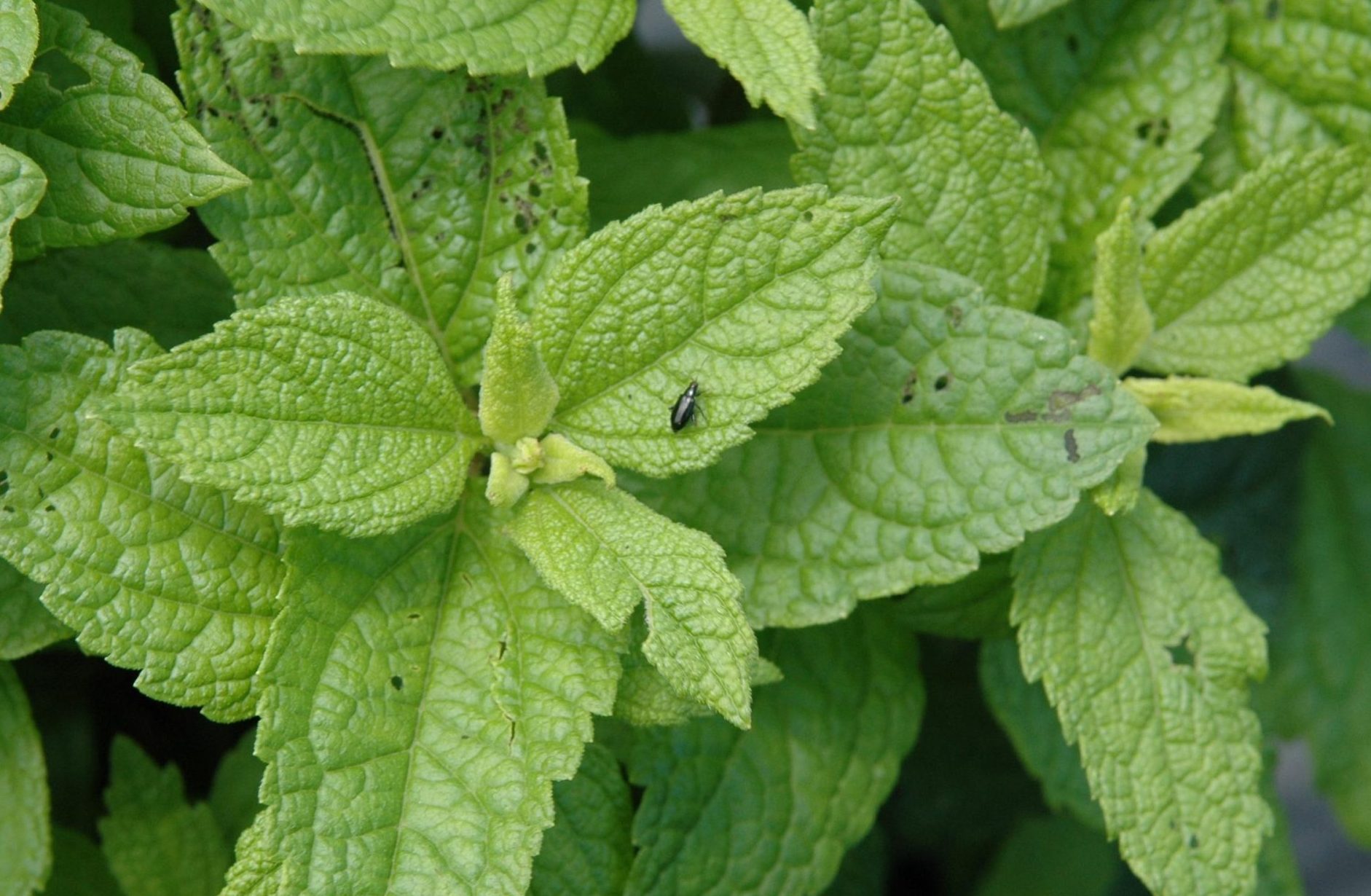
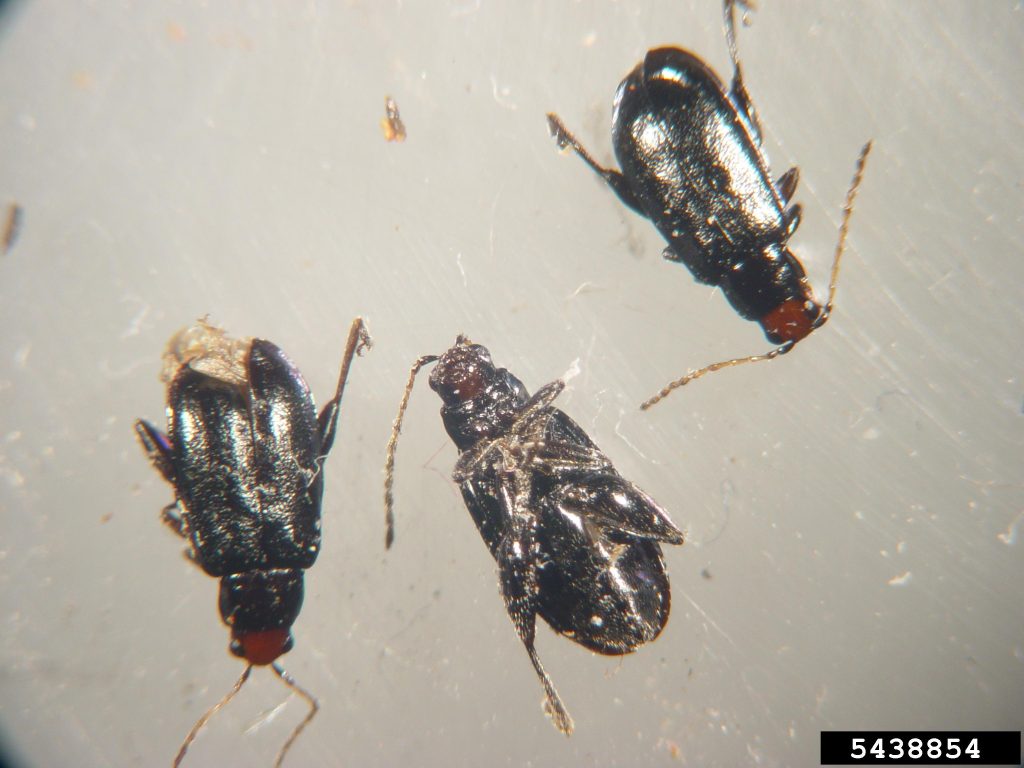
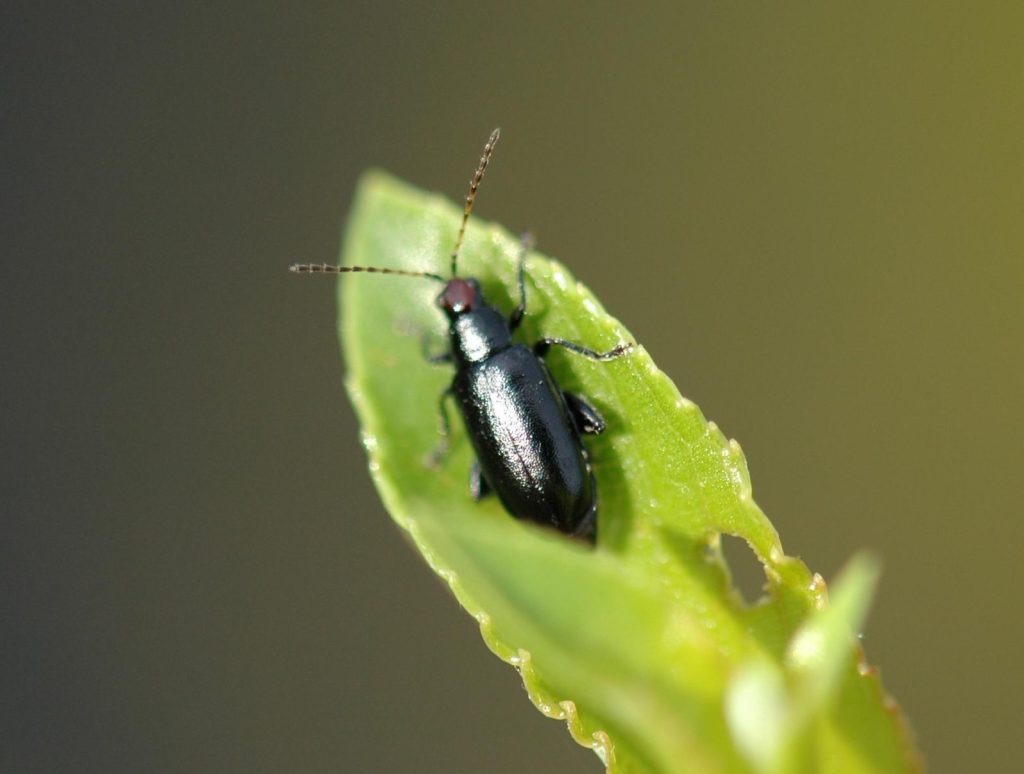
RHFB adults are about 0.2 inches in length, with shiny metallic-black colored bodies. Its red-tinged head is a unique character that distinguishes RHFB from other flea and leaf beetle species. Females are slightly larger than males. Antennae are light brown with dark brown distal segments, serrate, and originate below the eyes. Femura of the last pair of legs are swollen, which enables RHFB to jump.
Mature females lay pale-yellow eggs singly in the potting medium. Larvae are about 0.5 to 1 cm in length, creamy-white in color, with pale brown head capsules and legs. The last segment on rear end of a larva has a prominent upward-pointing setae (hairs). Larvae feed on roots and develop over three larval stages.
RHFB overwinters as eggs. In nurseries, feeding damage to foliage by adult beetles is typically first observed during last week of May in Georgia. After a distinct first generation emergence in the spring, multiple overlapping generations occur in Georgia until late October. During summer, multiple stages (eggs, larvae, and adults) may be found on an individual containerized plant. The timing of each life stage is subject to local environmental conditions.
Host Plants
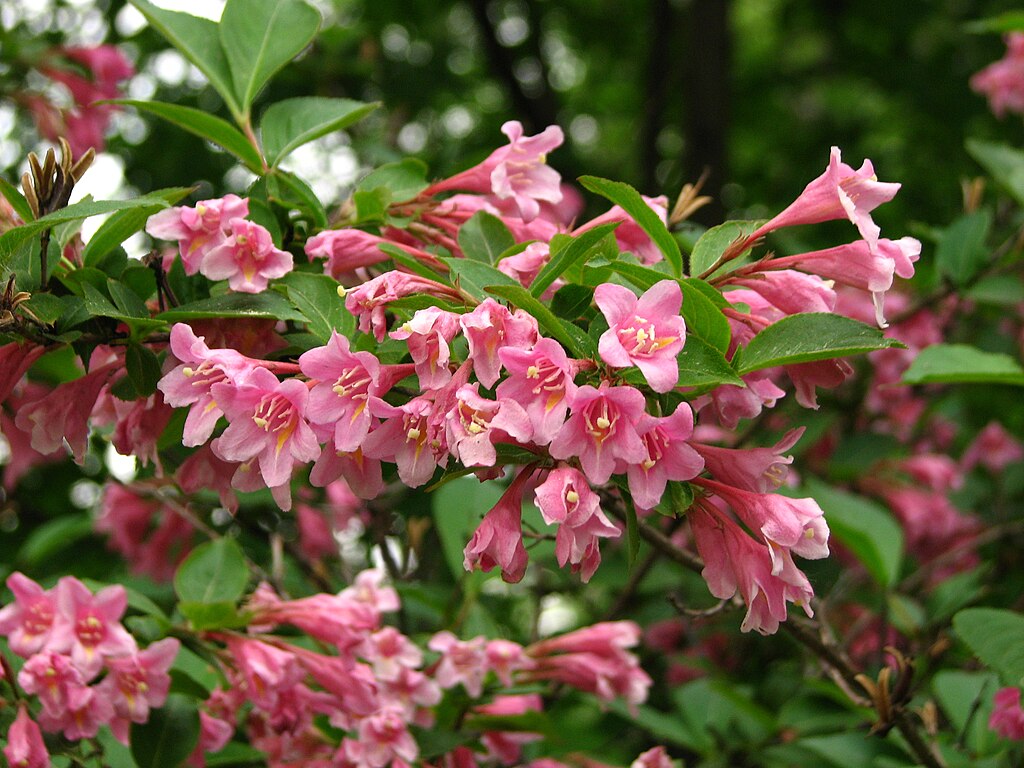
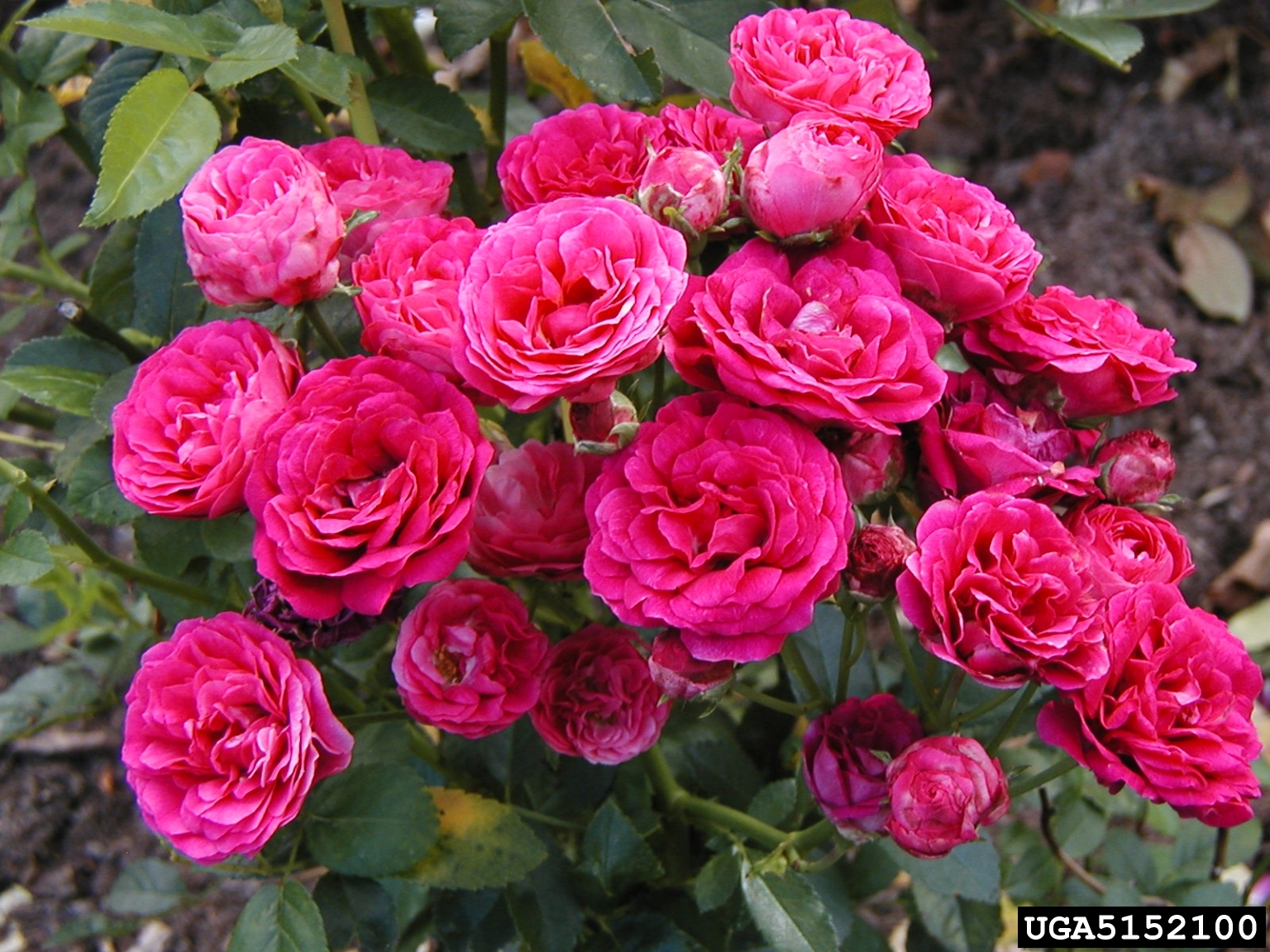
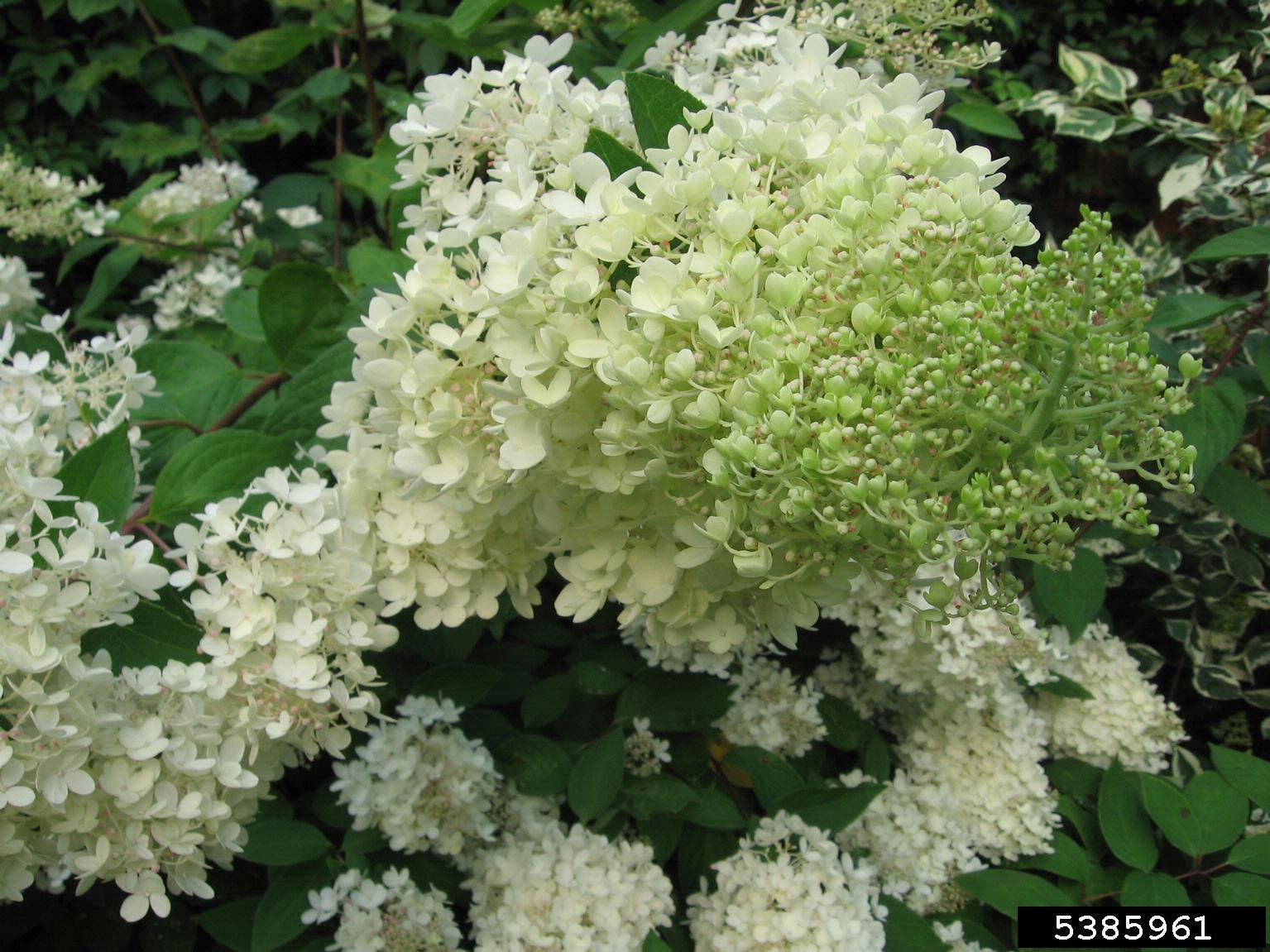
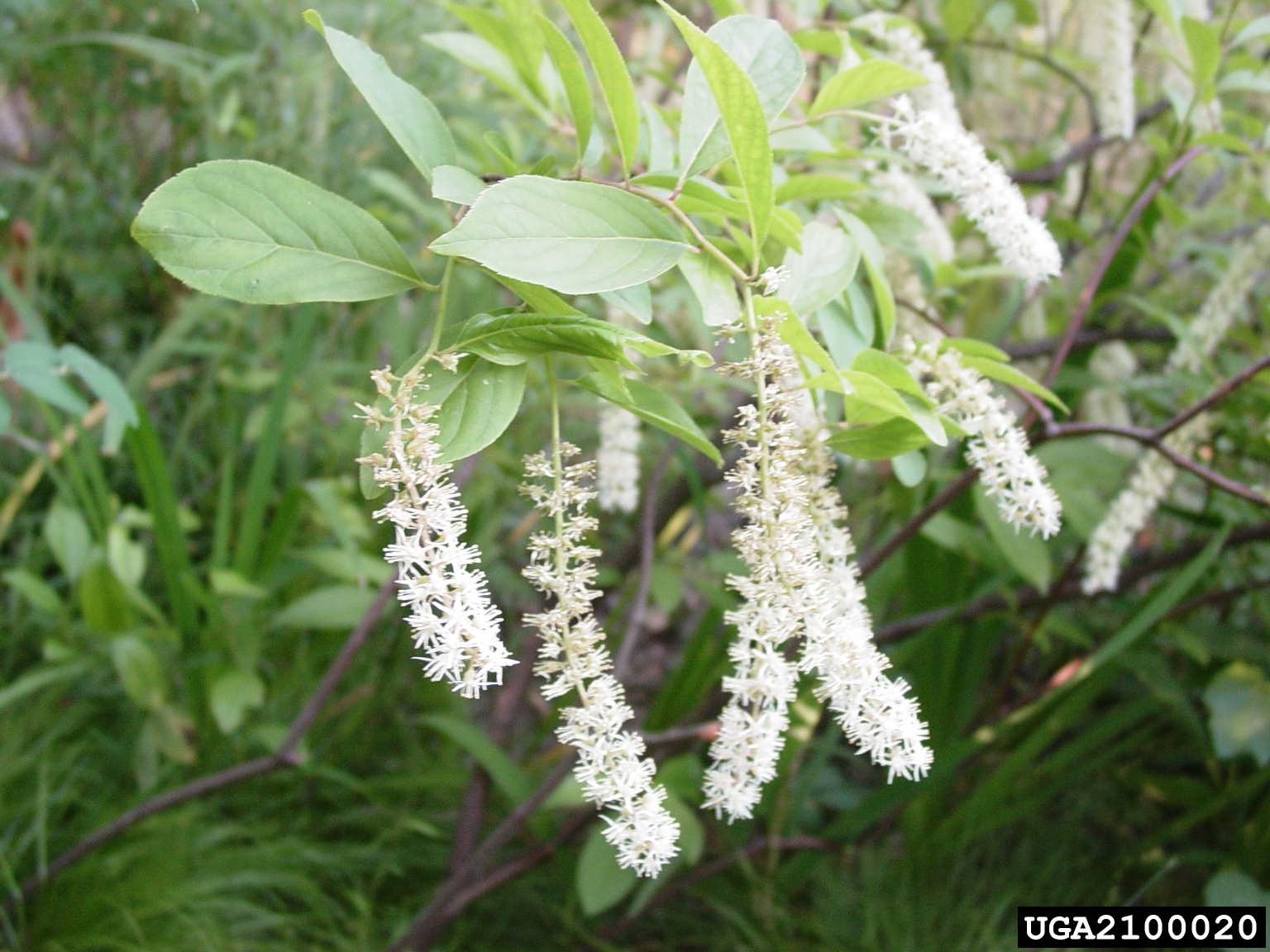
RHFB feed and cause damage to numerous plants grown in nurseries. Preferred host plants include panicle hydrangea (Hydrangea paniculata), roses (Rosa spp.), Virginia sweetspire (Itea virginica) and weigela (Weigela florida). Other favorite hosts are forsythia (Forsythia x intermedia), anise-tree (Illicium spp.), azalea (Rhododendron spp.), crapemyrtle (Lagerstroemia spp.), dogwoods (Cornus spp.), Japanese holly (Ilex crenata), , loropetalum (Loropetalum sinense), fragrant osmanthus (Osmanthus fragrans), viburnum (Viburnum spp.), and wax myrtle (Morelia cerifera). In addition to woody ornamental plants, RHFB attacks herbaceous hosts such as aster (Aster spp.), chrysanthemum (Dendranthema spp.), tickseed (Coreopsis spp.), goldenrod (Solidago spp.), joe-pye weed (Eupatorium spp.), salvia (Salvia spp.), sedum (Sedum spp.), veronica (Veronica spp.), and zinnia (Zinnia spp.).
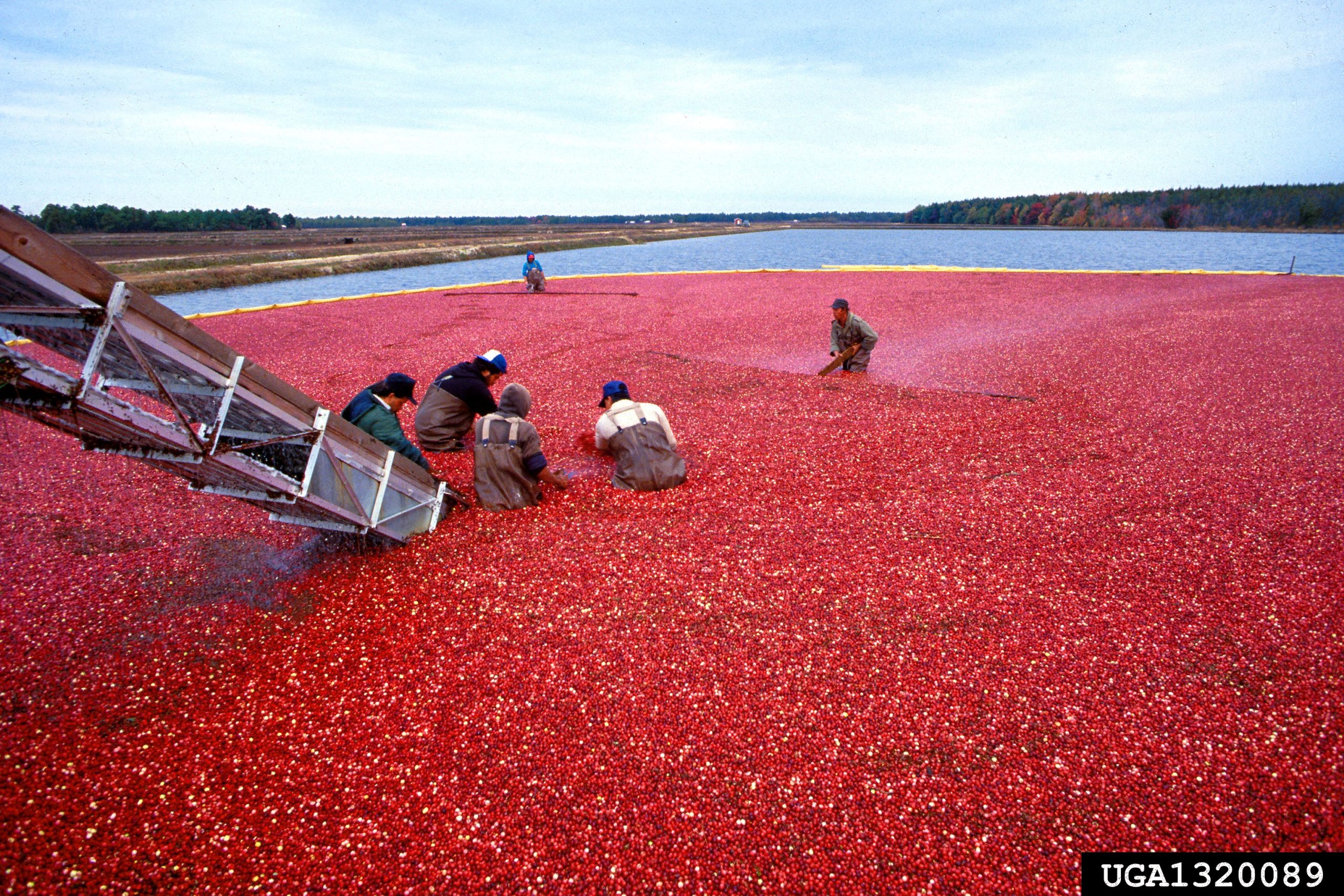
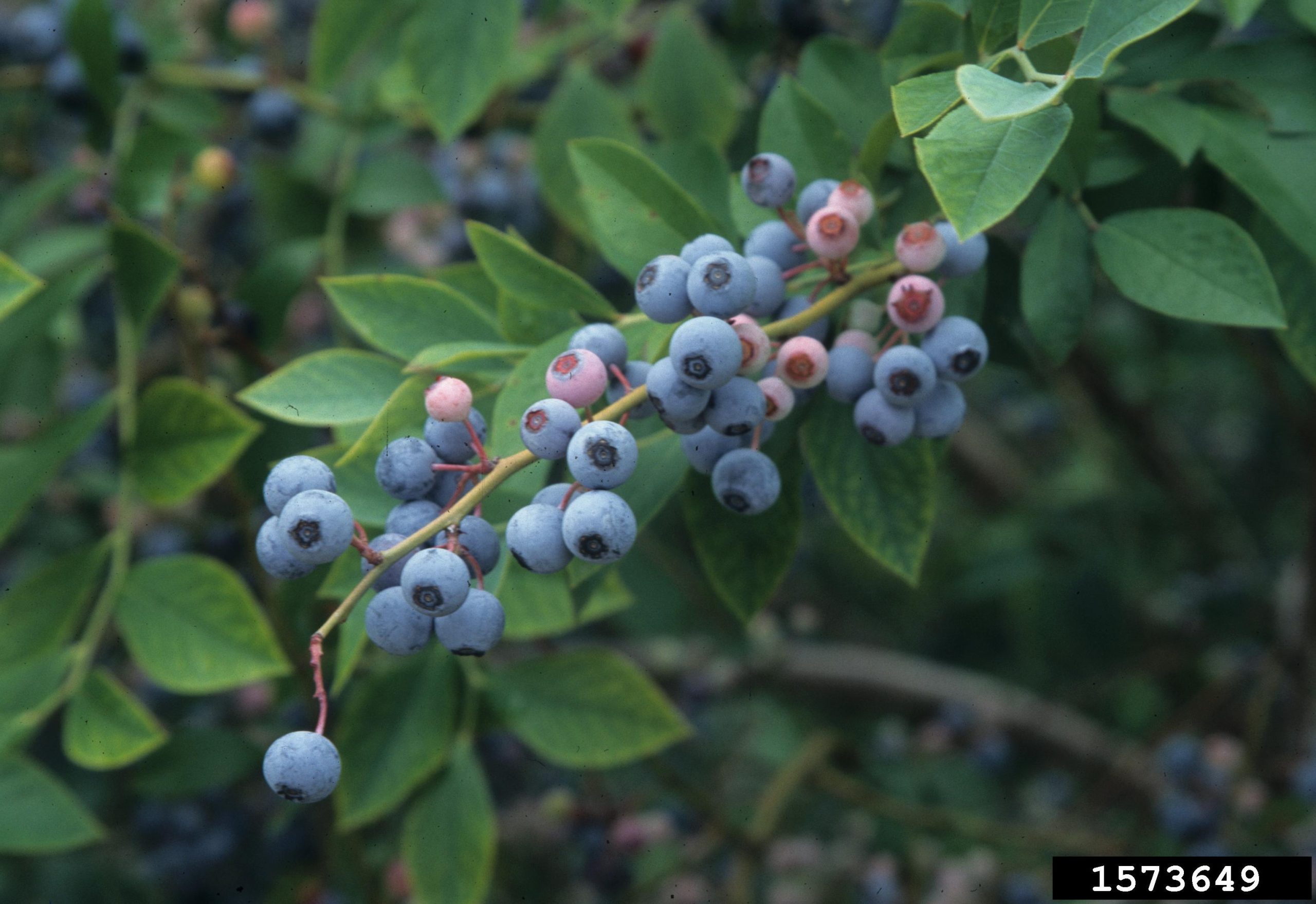
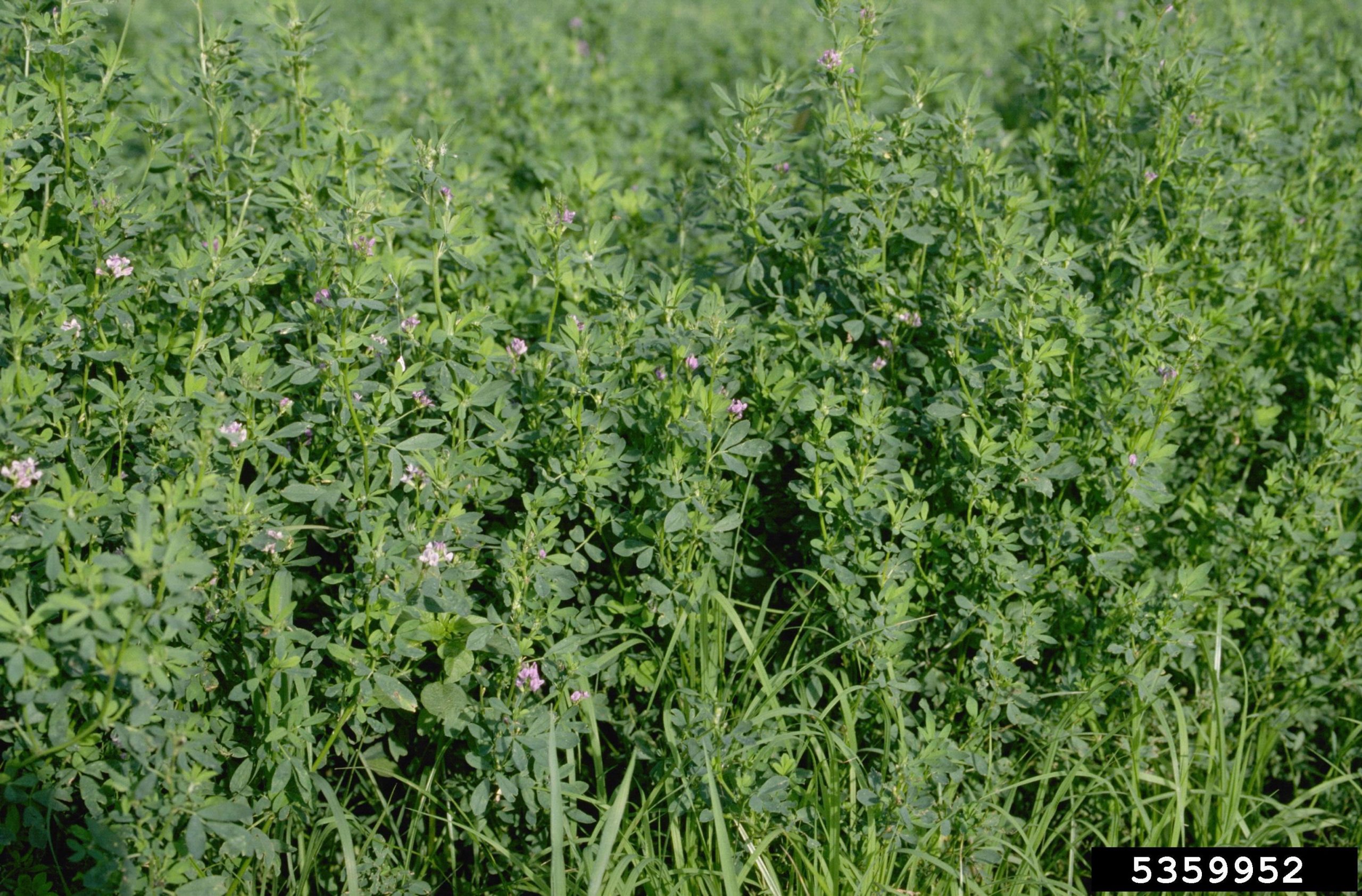
RHFB also attack other non-ornamental or agronomic crops. For example, it is a major pest of cranberry and blueberry (Vacinium spp.) and alfalfa (Medicago sativa) in the northern states. RHFB has been reported to attack agronomic crops, such as soybean and potato.
RHFB can also feed on weeds such as eclipta (Eclipta prostrata), jewelweed (Impatiens capensis), lambsquarter (Chenopodium album), pigweed (Amaranthus spp.), smartweed (Polygonum spp.), Canadian thistle (Cirsium arvense), clover (Trifolium spp.) and common burdock (Arctium minus). The range of plants reported as damaged by RHFB suggests that the beetle can feed on virtually any broadleaf woody or herbaceous plant growing in or around the nursery.
Damage
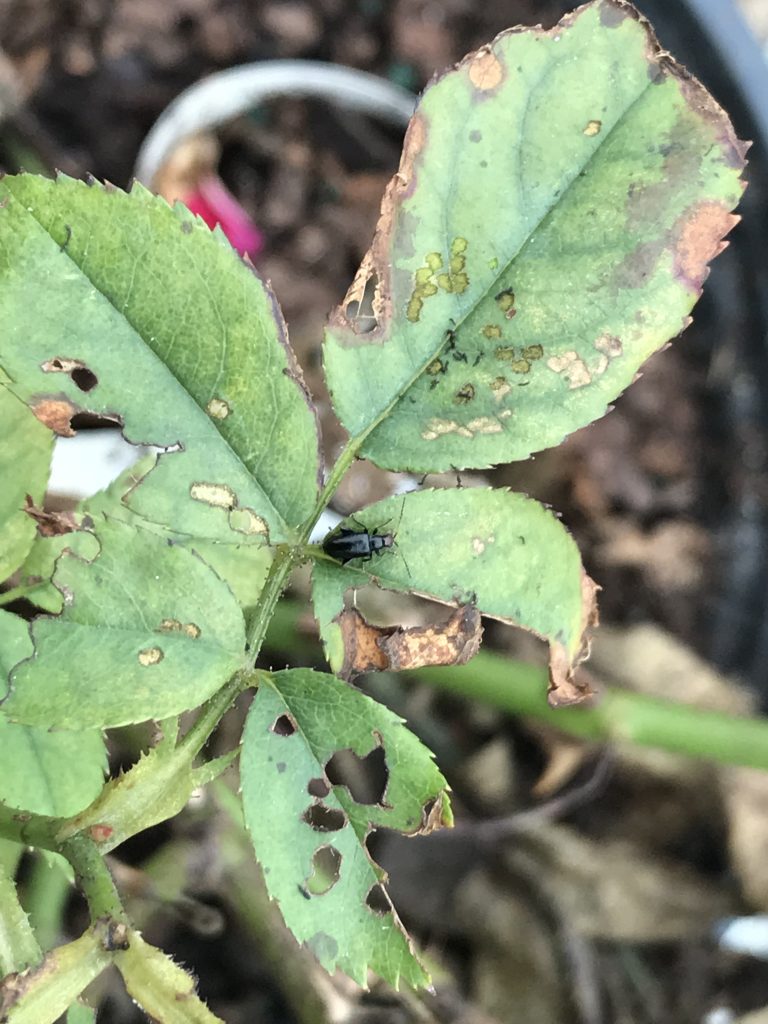
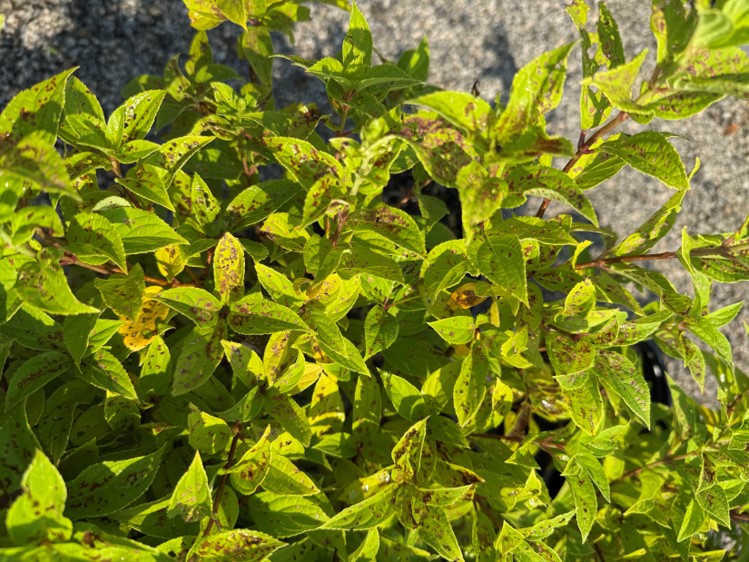
RHFB adults feed on the leaves, causing numerous holes. Severe feeding damage skeletonizes foliage by removing both upper and lower leaf surfaces. They often deposit fecal matter near the feeding site. Damage to plants can be severe and rapid depending on the number of RHFB adults. Affected plants are ragged and typically not marketable. The impact of root feeding by RHFB larvae on plant growth and health is currently unknown.
Monitoring & Management
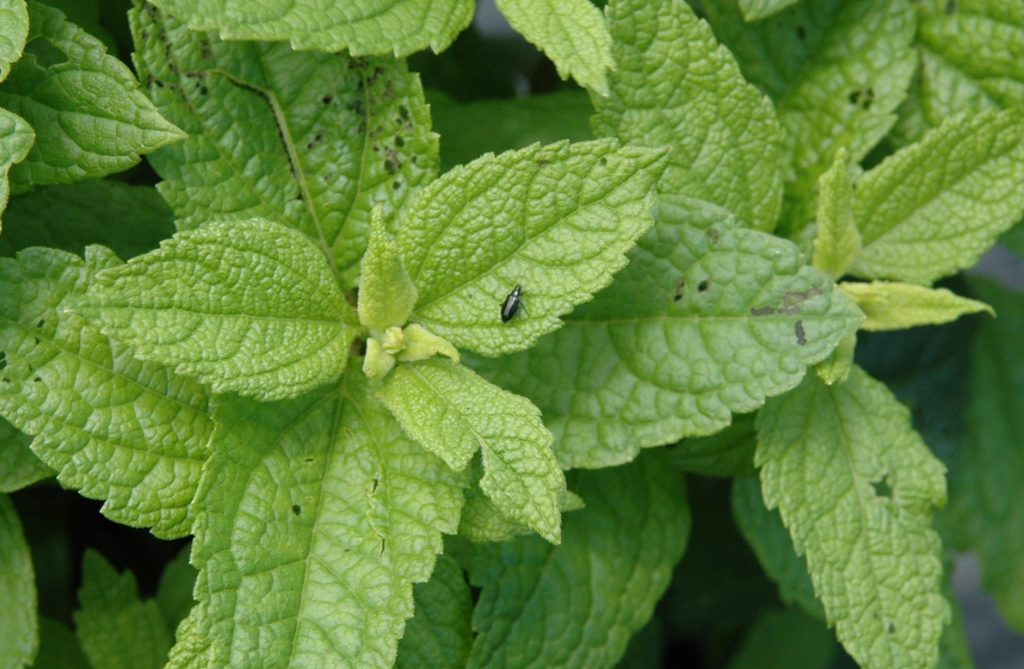

Nursery plants, especially those preferred hosts (such as paniculate hydrangea, itea and rose), should be aggressively scouted weekly for adult activity starting in mid-May. The best time for scouting is mid-morning after the dew has dried and when the adult beetles are most active on the foliage. Treatment is recommended as soon as feeding damage is observed.
Because RHFB can feed on several weed species, weed management in and around the nursery could reduce alternative food resources and prevent population build up and invasion into the nursery. If the container stock is already infested with RHFB, it is advised not to place newly propagated plant containers near infested stock plants.
Biological control option is limited. There are currently no commercially available predator or parasitoid to purchase and release. Media drench of microbial biological control agents or biopesticides, such as entomopathogenic nematode (Steinernema carpocapsae) and fungi (Beauveria bassiana and Metarhizium anisopliae), are effective against larval stages of RHFB in containers.
Foliar sprays of insecticides are essential to reduce adult damage. There is currently no threshold established for this pest; even a low level of foliar damage is not tolerated. Thorough spray coverage of the canopy is important to protect foliage from damage. Repeated application is also necessary because most contact insecticides do not repel adult beetles, which can be active for multiple months. For current insecticide recommendations, contact your local county Extension office.
Media drench or top-dressing application of insecticides can yield acceptable control of larvae, thus reducing the abundance and damage of adults in the subsequent seasons. The key to success is to achieve uniform distribution of the insecticide solution throughout the root ball or the insecticide granules on the media surface. Drench or top-dress treatment could be applied in spring to target eggs and young larvae.
Research & Extension Priorities
A survey was developed to identify research and extension needs associated with the management of RHFB in ornamental plant nurseries. Researchers and Extension personnel from Cornell University, University of Delaware, University of Maryland, Virginia Polytechnic Institute and State University, North Carolina State University, Clemson University, University of Tennessee, University of Georgia, Auburn University, Louisiana State University, University of Florida, and Texas A&M University contributed to the development of the questionnaire and the distribution of the survey. The respondents ranked the pre-populated research and Extension needs (listed in the following table) as 1 (very important), 2 (important), 3 (somewhat important), 4 (slightly important), and 5 (not important).
The survey was administered through an online survey tool (Qualtrics, Provo, UT) under a subscription purchased by the University of Georgia and distributed to members of the green industry, including wholesale and retail nurseries and retail garden centers, and landscape installation and maintenance companies. In addition, the survey was distributed via emails, newsletters, and Extension publications from the participating institutions and trade organizations representing the green industry. The newsletters are often distributed beyond state lines and reach a broad audience. Survey responses received via Qualtrics between 24 June and 2 September 2020 were included in this analysis. The mean and standard deviation of responses was calculated for each research or Extension need.
Ten research topics related to the biology and management of RHFB were ranked stakeholders as the most important. Stakeholders were most interested in improving the efficacy, delivery methods residual activity of insecticides, identifying alternative control options (such as repellents), and understanding the compatibility of control options with current cultural practices. Also highly ranked are topics related to the biology of RHFB, including the performance of various life stages, reproductive parameters, generations, overwintering biology, impact of abiotic factors (such as temperature and relative humidity), and factors triggering adult dispersal. Developing monitoring traps and identifying attractive cues, such as pheromone, light, etc., was identified as the top-ranked monitoring question. Determining the cost-benefit ratio of each control treatment option was ranked as the top economic question.
Stakeholders may prefer to receive research information through digital media (videos, blogs, social media, e-newsletter, etc.); therefore, outreach efforts should consider digital media as important outlets for information. The research and Extension priorities will be used for funding opportunities and guide future research.
Mobile version defaults to simplified view. Click below to open full version with horizontal scroll. The default setting for this table is by overall rank. Tap on the relevant headings to sort by that category (numerically or alphabetically). n is the number of responses per question.
Open Full Version
| Overall Rank | Research Rank | Extension Rank | Research Question | Mean | Standard Deviation | n | Research Area |
|---|---|---|---|---|---|---|---|
| 1 | 1 | Evaluate the efficacy and residual activity of insecticide against adults and larvae. | 1.33 | 0.9 | 24 | Management | |
| 2 | 2 | Quantify the difference among insecticide application methods against adults and larvae. | 1.38 | 0.9 | 24 | Management | |
| 3 | 3 | Understand the life cycle of RHFB, which includes the number of generations, the activity time of adults and larvae, survival of each life stage, reproductive capability, etc. | 1.67 | 1.07 | 24 | Biology | |
| 4 | 4 | Evaluate the potential of improving residual efficacy of insecticides with protectants, extenders or other adjuvants. | 1.73 | 0.91 | 22 | Management | |
| 5 | 5 | Identify the location and life stage in which RHFB overwinter. | 1.79 | 1.19 | 24 | Biology | |
| 6 | 1 | How important is digital media (videos, blogs, social media, e-newsletter, etc.) as your source of information? | 1.87 | 0.95 | 23 | Extension | |
| 7 | 6 | Understand how environmental factors, such as temperature, rainfall, and wind, influence the development, survival, and reproduction of RHFB. | 1.88 | 1.2 | 24 | Biology | |
| 8 | 7 | Identify factor(s) that triggers adult flight or dispersal. | 1.88 | 1.33 | 24 | Biology | |
| 9 | 8 | Determine if insecticide efficacy against larvae may be influenced by irrigation frequency or amount. | 1.88 | 1.01 | 24 | Management | |
| 10 | 9 | Evaluate existing repellents against adults, such as kaolin clay. | 1.92 | 1.19 | 24 | Management | |
| 11 | 10 | Identify the most susceptible life stage for each biological control agent. | 1.92 | 1.35 | 24 | Management | |
| 12 | 11 | Identify the biotic (such as host plant and insect physiology) and abiotic factors (such as temperature and rainfall) that trigger the activity timing of adults and larvae. | 2 | 1.19 | 24 | Management | |
| 13 | 12 | Identify the biotic (such as host plant and insect physiology) and abiotic factors (such as temperature and rainfall) that trigger reproduction. | 2 | 0.98 | 23 | Management | |
| 14 | 13 | Determine if the majority of adults dispersed from the fields into the nursery or originated from larvae developing in the medium of the containerized plants. | 2 | 1.22 | 24 | Management | |
| 15 | 14 | Evaluate the efficacy of each biological control agent in a field production setting. | 2 | 1.35 | 24 | Management | |
| 16 | 15 | Develop a state or regional degree-day model for RHFB. | 2.04 | 1.27 | 24 | Biology | |
| 17 | 2 | How important is print media (bulletins, fact sheets, magazines, etc.) as your source of information? | 2.04 | 0.93 | 24 | Extension | |
| 18 | 16 | Identify predators or parasitoids for controlling RHFB. | 2.04 | 1.34 | 24 | Management | |
| 19 | 17 | Identify characteristics that make a plant susceptible or resistant. | 2.08 | 1.38 | 24 | Management | |
| 20 | 18 | Determine if potting medium (type, composition, etc.) influence larval survival and development. | 2.08 | 1.32 | 24 | Management | |
| 21 | 19 | Determine if water management reduces RHFB abundance and damage. | 2.08 | 1.08 | 24 | Management | |
| 22 | 20 | Develop new trapping or monitoring methods, such as pheromone, light, or visual traps. | 2.08 | 1.32 | 24 | Monitoring | |
| 23 | 21 | Determine a treatment threshold. | 2.13 | 1.51 | 24 | Monitoring | |
| 24 | 22 | Determine if RHFB are attracted to plant volatile, and identify these plant volatiles. | 2.13 | 1.05 | 24 | Monitoring | |
| 25 | 23 | Develop a plant volatile-based lure for monitoring or mass trapping. | 2.13 | 1.33 | 24 | Monitoring | |
| 26 | 24 | Evaluate existing, commercially available lures and traps for monitoring. | 2.13 | 1.3 | 24 | Monitoring | |
| 27 | 25 | Quantify the cost-benefit ratio of each treatment option. | 2.13 | 1.2 | 24 | Economics | |
| 28 | 26 | Identify the biotic (host plant and insect physiology) and abiotic factors (such as temperature and rainfall) that trigger overwintering. | 2.17 | 1.24 | 23 | Biology | |
| 29 | 27 | Quantify the impact of adult feeding on plant growth, appearance, and marketability. | 2.17 | 1.46 | 24 | Economics | |
| 30 | 28 | Identify spatial and temporal patterns in the appearance of adults or the severity of the damage. | 2.17 | 1.14 | 24 | Biology | |
| 31 | 3 | Develop guidelines for using biological control against RHFB. | 2.17 | 1.37 | 23 | Extension | |
| 32 | 29 | Understand how host plant species influence the development, survival, and reproduction of RHFB. | 2.21 | 1.08 | 24 | Biology | |
| 33 | 30 | Quantify the impact of larval feeding on plant growth, appearance, and marketability. | 2.21 | 1.5 | 24 | Management | |
| 34 | 31 | Determine if plant spacing influences the severity of the damage. | 2.21 | 1.32 | 24 | Management | |
| 35 | 32 | Determine the accuracy of predictive models (degree-day or plant phenology indicator) on the regional scale, and identify the factor(s) that can reduce/improve the model accuracy. | 2.21 | 1.15 | 24 | Management | |
| 36 | 33 | Quantify the impact of potting medium (type, composition, etc.) on insecticide efficacy. | 2.21 | 1.22 | 24 | Management | |
| 37 | 34 | Determine if economic considerations influence the adoption of treatment options. | 2.21 | 1.29 | 24 | Economics | |
| 38 | 35 | Identify the major host species in the field if the majority of adults originated from the surrounding fields. | 2.25 | 1.36 | 24 | Biology | |
| 39 | 36 | Determine if soil fertility affects RHFB abundance and damage. | 2.25 | 1.16 | 24 | Management | |
| 40 | 4 | Develop guidelines on the deployment method of various traps when the traps become available. | 2.25 | 1.36 | 24 | Extension | |
| 41 | 5 | Determine if economic considerations influence consumer acceptance or the perceived value of a crop. | 2.25 | 1.33 | 24 | Extension | |
| 42 | 37 | Identify factor(s) contributing to the spatial pattern in adult activity and damage, if there is one. | 2.29 | 0.98 | 24 | Biology | |
| 43 | 38 | Understand how microclimate within a nursery can influence the accuracy of a degree-day model for RHFB. | 2.29 | 1.21 | 24 | Biology | |
| 44 | 39 | Evaluate the efficacy of rotating crops within the nursery in reducing RHFB population/damage or improving control. | 2.29 | 1.34 | 24 | Management | |
| 45 | 40 | Identify commercial and non-commercially available entomopathogenic nematodes and fungi for controlling RHFB. | 2.29 | 1.46 | 24 | Management | |
| 46 | 41 | Conduct risk analysis on spatial and temporal patterns, and develop a predictive risk model. | 2.33 | 1.14 | 24 | Biology | |
| 47 | 42 | Determine the relative susceptibility of plant species. | 2.38 | 1.35 | 24 | Biology | |
| 48 | 43 | Develop a plant phenological indicator model for RHFB. | 2.38 | 1.28 | 24 | Biology | |
| 49 | 44 | Quantify the economic value of RHFB-susceptible plant species on a state, regional and national level. | 2.38 | 1.41 | 24 | Economics | |
| 50 | 6 | Develop a website or clearinghouse for RHFB resources and information. | 2.43 | 1.21 | 23 | Extension | |
| 51 | 7 | Develop a web-based reporting and tracking system (such as EDDMaps) on the county level. | 2.5 | 1.29 | 24 | Extension | |
| 52 | 45 | Determine if RHFB populations on different crop species (such as nursery crops, cranberry, soybean, and potato) represent different species or biotypes. | 2.54 | 1.41 | 24 | Biology | |
| 53 | 46 | Evaluate the potential of using a physical barrier (such as screen, fence, or guard) in reducing EHFB abundance and damage. | 3 | 1.47 | 24 | Management |
| Overall Rank | Research + Extension Rank | Research Question | Research Area |
|---|---|---|---|
| 1 | Research: 1 | Evaluate the efficacy and residual activity of insecticide against adults and larvae. | Management |
| 2 | Research: 2 | Quantify the difference among insecticide application methods against adults and larvae. | Management |
| 3 | Research: 3 | Understand the life cycle of RHFB, which includes the number of generations, the activity time of adults and larvae, survival of each life stage, reproductive capability, etc. | Biology |
| 4 | Research: 4 | Evaluate the potential of improving residual efficacy of insecticides with protectants, extenders or other adjuvants. | Management |
| 5 | Research: 5 | Identify the location and life stage in which RHFB overwinter. | Biology |
| 6 | Extension: 1 | How important is digital media (videos, blogs, social media, e-newsletter, etc.) as your source of information? | Extension |
| 7 | Research: 6 | Understand how environmental factors, such as temperature, rainfall, and wind, influence the development, survival, and reproduction of RHFB. | Biology |
| 8 | Research: 7 | Identify factor(s) that triggers adult flight or dispersal. | Biology |
| 9 | Research: 8 | Determine if insecticide efficacy against larvae may be influenced by irrigation frequency or amount. | Management |
| 10 | Research: 9 | Evaluate existing repellents against adults, such as kaolin clay. | Management |
| 11 | Research: 10 | Identify the most susceptible life stage for each biological control agent. | Management |
| 12 | Research: 11 | Identify the biotic (such as host plant and insect physiology) and abiotic factors (such as temperature and rainfall) that trigger the activity timing of adults and larvae. | Management |
| 13 | Research: 12 | Identify the biotic (such as host plant and insect physiology) and abiotic factors (such as temperature and rainfall) that trigger reproduction. | Management |
| 14 | Research: 13 | Determine if the majority of adults dispersed from the fields into the nursery or originated from larvae developing in the medium of the containerized plants. | Management |
| 15 | Research: 14 | Evaluate the efficacy of each biological control agent in a field production setting. | Management |
| 16 | Research: 15 | Develop a state or regional degree-day model for RHFB. | Biology |
| 17 | Extension: 2 | How important is print media (bulletins, fact sheets, magazines, etc.) as your source of information? | Extension |
| 18 | Research: 16 | Identify predators or parasitoids for controlling RHFB. | Management |
| 19 | Research: 17 | Identify characteristics that make a plant susceptible or resistant. | Management |
| 20 | Research: 18 | Determine if potting medium (type, composition, etc.) influence larval survival and development. | Management |
| 21 | Research: 19 | Determine if water management reduces RHFB abundance and damage. | Management |
| 22 | Research: 20 | Develop new trapping or monitoring methods, such as pheromone, light, or visual traps. | Monitoring |
| 23 | Research: 21 | Determine a treatment threshold. | Monitoring |
| 24 | Research: 22 | Determine if RHFB are attracted to plant volatile, and identify these plant volatiles. | Monitoring |
| 25 | Research: 23 | Develop a plant volatile-based lure for monitoring or mass trapping. | Monitoring |
| 26 | Research: 24 | Evaluate existing, commercially available lures and traps for monitoring. | Monitoring |
| 27 | Research: 25 | Quantify the cost-benefit ratio of each treatment option. | Economics |
| 28 | Research: 26 | Identify the biotic (host plant and insect physiology) and abiotic factors (such as temperature and rainfall) that trigger overwintering. | Biology |
| 29 | Research: 27 | Quantify the impact of adult feeding on plant growth, appearance, and marketability. | Economics |
| 30 | Research: 28 | Identify spatial and temporal patterns in the appearance of adults or the severity of the damage. | Biology |
| 31 | Extension: 3 | Develop guidelines for using biological control against RHFB. | Extension |
| 32 | Research: 29 | Understand how host plant species influence the development, survival, and reproduction of RHFB. | Biology |
| 33 | Research: 30 | Quantify the impact of larval feeding on plant growth, appearance, and marketability. | Management |
| 34 | Research: 31 | Determine if plant spacing influences the severity of the damage. | Management |
| 35 | Research: 32 | Determine the accuracy of predictive models (degree-day or plant phenology indicator) on the regional scale, and identify the factor(s) that can reduce/improve the model accuracy. | Management |
| 36 | Research: 33 | Quantify the impact of potting medium (type, composition, etc.) on insecticide efficacy. | Management |
| 37 | Research: 34 | Determine if economic considerations influence the adoption of treatment options. | Economics |
| 38 | Research: 35 | Identify the major host species in the field if the majority of adults originated from the surrounding fields. | Biology |
| 39 | Research: 36 | Determine if soil fertility affects RHFB abundance and damage. | Management |
| 40 | Extension: 4 | Develop guidelines on the deployment method of various traps when the traps become available. | Extension |
| 41 | Extension: 5 | Determine if economic considerations influence consumer acceptance or the perceived value of a crop. | Extension |
| 42 | Research: 37 | Identify factor(s) contributing to the spatial pattern in adult activity and damage, if there is one. | Biology |
| 43 | Research: 38 | Understand how microclimate within a nursery can influence the accuracy of a degree-day model for RHFB. | Biology |
| 44 | Research: 39 | Evaluate the efficacy of rotating crops within the nursery in reducing RHFB population/damage or improving control. | Management |
| 45 | Research: 40 | Identify commercial and non-commercially available entomopathogenic nematodes and fungi for controlling RHFB. | Management |
| 46 | Research: 41 | Conduct risk analysis on spatial and temporal patterns, and develop a predictive risk model. | Biology |
| 47 | Research: 42 | Determine the relative susceptibility of plant species. | Biology |
| 48 | Research: 43 | Develop a plant phenological indicator model for RHFB. | Biology |
| 49 | Research: 44 | Quantify the economic value of RHFB-susceptible plant species on a state, regional and national level. | Economics |
| 50 | Extension: 6 | Develop a website or clearinghouse for RHFB resources and information. | Extension |
| 51 | Extension: 7 | Develop a web-based reporting and tracking system (such as EDDMaps) on the county level. | Extension |
| 52 | Research: 45 | Determine if RHFB populations on different crop species (such as nursery crops, cranberry, soybean, and potato) represent different species or biotypes. | Biology |
| 53 | Research: 46 | Evaluate the potential of using a physical barrier (such as screen, fence, or guard) in reducing EHFB abundance and damage. | Management |
Research & Extension Priorities
A survey was developed to identify research and extension needs associated with the management of RHFB in ornamental plant nurseries. Researchers and Extension personnel from Cornell University, University of Delaware, University of Maryland, Virginia Polytechnic Institute and State University, North Carolina State University, Clemson University, University of Tennessee, University of Georgia, Auburn University, Louisiana State University, University of Florida, and Texas A&M University contributed to the development of the questionnaire and the distribution of the survey. The respondents ranked the pre-populated research and Extension needs (listed in the following table) as 1 (very important), 2 (important), 3 (somewhat important), 4 (slightly important), and 5 (not important).
The survey was administered through an online survey tool (Qualtrics, Provo, UT) under a subscription purchased by the University of Georgia and distributed to members of the green industry, including wholesale and retail nurseries and retail garden centers, and landscape installation and maintenance companies. In addition, the survey was distributed via emails, newsletters, and Extension publications from the participating institutions and trade organizations representing the green industry. The newsletters are often distributed beyond state lines and reach a broad audience. Survey responses received via Qualtrics between 24 June and 2 September 2020 were included in this analysis. The mean and standard deviation of responses was calculated for each research or Extension need.
Ten research topics related to the biology and management of RHFB were ranked stakeholders as the most important. Stakeholders were most interested in improving the efficacy, delivery methods residual activity of insecticides, identifying alternative control options (such as repellents), and understanding the compatibility of control options with current cultural practices. Also highly ranked are topics related to the biology of RHFB, including the performance of various life stages, reproductive parameters, generations, overwintering biology, impact of abiotic factors (such as temperature and relative humidity), and factors triggering adult dispersal. Developing monitoring traps and identifying attractive cues, such as pheromone, light, etc., was identified as the top-ranked monitoring question. Determining the cost-benefit ratio of each control treatment option was ranked as the top economic question.
Stakeholders may prefer to receive research information through digital media (videos, blogs, social media, e-newsletter, etc.); therefore, outreach efforts should consider digital media as important outlets for information. The research and Extension priorities will be used for funding opportunities and guide future research.
The default setting for this table is by overall rank. Click on the relevant headings to sort by that category (numerically or alphabetically). n is the number of responses per question.
| Overall Rank | Research Rank | Extension Rank | Research Question | Mean | Standard Deviation | n | Research Area |
|---|---|---|---|---|---|---|---|
| 1 | 1 | Evaluate the efficacy and residual activity of insecticide against adults and larvae. | 1.33 | 0.9 | 24 | Management | |
| 2 | 2 | Quantify the difference among insecticide application methods against adults and larvae. | 1.38 | 0.9 | 24 | Management | |
| 3 | 3 | Understand the life cycle of RHFB, which includes the number of generations, the activity time of adults and larvae, survival of each life stage, reproductive capability, etc. | 1.67 | 1.07 | 24 | Biology | |
| 4 | 4 | Evaluate the potential of improving residual efficacy of insecticides with protectants, extenders or other adjuvants. | 1.73 | 0.91 | 22 | Management | |
| 5 | 5 | Identify the location and life stage in which RHFB overwinter. | 1.79 | 1.19 | 24 | Biology | |
| 6 | 1 | How important is digital media (videos, blogs, social media, e-newsletter, etc.) as your source of information? | 1.87 | 0.95 | 23 | Extension | |
| 7 | 6 | Understand how environmental factors, such as temperature, rainfall, and wind, influence the development, survival, and reproduction of RHFB. | 1.88 | 1.2 | 24 | Biology | |
| 8 | 7 | Identify factor(s) that triggers adult flight or dispersal. | 1.88 | 1.33 | 24 | Biology | |
| 9 | 8 | Determine if insecticide efficacy against larvae may be influenced by irrigation frequency or amount. | 1.88 | 1.01 | 24 | Management | |
| 10 | 9 | Evaluate existing repellents against adults, such as kaolin clay. | 1.92 | 1.19 | 24 | Management | |
| 11 | 10 | Identify the most susceptible life stage for each biological control agent. | 1.92 | 1.35 | 24 | Management | |
| 12 | 11 | Identify the biotic (such as host plant and insect physiology) and abiotic factors (such as temperature and rainfall) that trigger the activity timing of adults and larvae. | 2 | 1.19 | 24 | Management | |
| 13 | 12 | Identify the biotic (such as host plant and insect physiology) and abiotic factors (such as temperature and rainfall) that trigger reproduction. | 2 | 0.98 | 23 | Management | |
| 14 | 13 | Determine if the majority of adults dispersed from the fields into the nursery or originated from larvae developing in the medium of the containerized plants. | 2 | 1.22 | 24 | Management | |
| 15 | 14 | Evaluate the efficacy of each biological control agent in a field production setting. | 2 | 1.35 | 24 | Management | |
| 16 | 15 | Develop a state or regional degree-day model for RHFB. | 2.04 | 1.27 | 24 | Biology | |
| 17 | 2 | How important is print media (bulletins, fact sheets, magazines, etc.) as your source of information? | 2.04 | 0.93 | 24 | Extension | |
| 18 | 16 | Identify predators or parasitoids for controlling RHFB. | 2.04 | 1.34 | 24 | Management | |
| 19 | 17 | Identify characteristics that make a plant susceptible or resistant. | 2.08 | 1.38 | 24 | Management | |
| 20 | 18 | Determine if potting medium (type, composition, etc.) influence larval survival and development. | 2.08 | 1.32 | 24 | Management | |
| 21 | 19 | Determine if water management reduces RHFB abundance and damage. | 2.08 | 1.08 | 24 | Management | |
| 22 | 20 | Develop new trapping or monitoring methods, such as pheromone, light, or visual traps. | 2.08 | 1.32 | 24 | Monitoring | |
| 23 | 21 | Determine a treatment threshold. | 2.13 | 1.51 | 24 | Monitoring | |
| 24 | 22 | Determine if RHFB are attracted to plant volatile, and identify these plant volatiles. | 2.13 | 1.05 | 24 | Monitoring | |
| 25 | 23 | Develop a plant volatile-based lure for monitoring or mass trapping. | 2.13 | 1.33 | 24 | Monitoring | |
| 26 | 24 | Evaluate existing, commercially available lures and traps for monitoring. | 2.13 | 1.3 | 24 | Monitoring | |
| 27 | 25 | Quantify the cost-benefit ratio of each treatment option. | 2.13 | 1.2 | 24 | Economics | |
| 28 | 26 | Identify the biotic (host plant and insect physiology) and abiotic factors (such as temperature and rainfall) that trigger overwintering. | 2.17 | 1.24 | 23 | Biology | |
| 29 | 27 | Quantify the impact of adult feeding on plant growth, appearance, and marketability. | 2.17 | 1.46 | 24 | Economics | |
| 30 | 28 | Identify spatial and temporal patterns in the appearance of adults or the severity of the damage. | 2.17 | 1.14 | 24 | Biology | |
| 31 | 3 | Develop guidelines for using biological control against RHFB. | 2.17 | 1.37 | 23 | Extension | |
| 32 | 29 | Understand how host plant species influence the development, survival, and reproduction of RHFB. | 2.21 | 1.08 | 24 | Biology | |
| 33 | 30 | Quantify the impact of larval feeding on plant growth, appearance, and marketability. | 2.21 | 1.5 | 24 | Management | |
| 34 | 31 | Determine if plant spacing influences the severity of the damage. | 2.21 | 1.32 | 24 | Management | |
| 35 | 32 | Determine the accuracy of predictive models (degree-day or plant phenology indicator) on the regional scale, and identify the factor(s) that can reduce/improve the model accuracy. | 2.21 | 1.15 | 24 | Management | |
| 36 | 33 | Quantify the impact of potting medium (type, composition, etc.) on insecticide efficacy. | 2.21 | 1.22 | 24 | Management | |
| 37 | 34 | Determine if economic considerations influence the adoption of treatment options. | 2.21 | 1.29 | 24 | Economics | |
| 38 | 35 | Identify the major host species in the field if the majority of adults originated from the surrounding fields. | 2.25 | 1.36 | 24 | Biology | |
| 39 | 36 | Determine if soil fertility affects RHFB abundance and damage. | 2.25 | 1.16 | 24 | Management | |
| 40 | 4 | Develop guidelines on the deployment method of various traps when the traps become available. | 2.25 | 1.36 | 24 | Extension | |
| 41 | 5 | Determine if economic considerations influence consumer acceptance or the perceived value of a crop. | 2.25 | 1.33 | 24 | Extension | |
| 42 | 37 | Identify factor(s) contributing to the spatial pattern in adult activity and damage, if there is one. | 2.29 | 0.98 | 24 | Biology | |
| 43 | 38 | Understand how microclimate within a nursery can influence the accuracy of a degree-day model for RHFB. | 2.29 | 1.21 | 24 | Biology | |
| 44 | 39 | Evaluate the efficacy of rotating crops within the nursery in reducing RHFB population/damage or improving control. | 2.29 | 1.34 | 24 | Management | |
| 45 | 40 | Identify commercial and non-commercially available entomopathogenic nematodes and fungi for controlling RHFB. | 2.29 | 1.46 | 24 | Management | |
| 46 | 41 | Conduct risk analysis on spatial and temporal patterns, and develop a predictive risk model. | 2.33 | 1.14 | 24 | Biology | |
| 47 | 42 | Determine the relative susceptibility of plant species. | 2.38 | 1.35 | 24 | Biology | |
| 48 | 43 | Develop a plant phenological indicator model for RHFB. | 2.38 | 1.28 | 24 | Biology | |
| 49 | 44 | Quantify the economic value of RHFB-susceptible plant species on a state, regional and national level. | 2.38 | 1.41 | 24 | Economics | |
| 50 | 6 | Develop a website or clearinghouse for RHFB resources and information. | 2.43 | 1.21 | 23 | Extension | |
| 51 | 7 | Develop a web-based reporting and tracking system (such as EDDMaps) on the county level. | 2.5 | 1.29 | 24 | Extension | |
| 52 | 45 | Determine if RHFB populations on different crop species (such as nursery crops, cranberry, soybean, and potato) represent different species or biotypes. | 2.54 | 1.41 | 24 | Biology | |
| 53 | 46 | Evaluate the potential of using a physical barrier (such as screen, fence, or guard) in reducing EHFB abundance and damage. | 3 | 1.47 | 24 | Management |